Music Weekly: Why Music?
In the fourth century BCE, Plato wrote The Republic—one of the most influential works in the history of human thought. In it, Plato examines how a person should live and how a society should establish order. Crucially, the book emphasizes that a well-educated citizenry is the foundation upon which a good society functions. Education, therefore, is never merely the transmission of knowledge, but the cultivation of the complete person: scholarship to nourish the mind, gymnastics to train the body, and music to shape the soul.
Across the world, Confucius expressed a remarkably similar idea: “Be awakened by poetry, established through ritual, and completed by music" showing how humanity’s understanding of what it means to become complete may differ in language and culture, yet often arrives at a shared recognition. Even today, as artificial intelligence rapidly inserts itself into every facet of life, we must still remember: technology is ultimately only a tool. The more powerful the tool becomes, the more the difference lies not in the tool itself, but in the wisdom of the person using it, and music, when taught and practiced ideally, is not merely an extracurricular activity, but rather one of the most complete forms of human training we possess. What it cultivates is not merely performance skill or aesthetic sensitivity, but a person’s ability to integrate thought, feeling, and motion within a complex environment. To understand this, we must turn from philosophy to science.
Over the past several decades, developments in neuroscience and psychology have gradually provided empirical support for this ancient intuition. Musical training has never been a one-dimensional activity. It simultaneously activates auditory and visual perception, tactile feedback, fine motor control, memory, attention, executive function, and emotional response, while requiring all of these abilities to be continuously integrated and coordinated in real time.
A large body of research has already shown that long-term musical training can shape the brain itself. In particular, research by Gaser and Schlaug found that systematically trained musicians often have greater gray matter volume in the auditory cortex, motor and premotor regions, the cerebellum, and parietal areas related to spatial processing. Earlier research by Schlaug also indicated that music students, especially those who began training at a young age, often have a more developed corpus callosum, the structure connecting the left and right hemispheres of the brain. For piano students, this is especially pronounced. The two hands must remain highly coordinated while functioning independently; they divide their labor, yet remain unified. This kind of training naturally demands constant, precise, and efficient information integration between the two hemispheres. In pop terminology, what it strengthens is precisely the connection between reason and feeling that makes for a complete individual.
Beyond structural changes in the brain, musical training is also closely related to the development of many core executive functions, including sustained attention, working memory, emotional regulation, organization, time management, adaptability, perseverance, and metacognition. At the same time, more refined auditory discrimination and pattern recognition are often linked to stronger language-processing ability. In other words, the significance of musical training has never been confined to music itself. What it shapes is the deeper foundation of a person’s abilities.
This becomes even clearer when we place musical training alongside other common forms of cultivation. Sports mainly shape the body and the will. Dance emphasizes the unity of body and expression. Visual art more often cultivates perception and aesthetic judgment. Strategy games and academics tend to emphasize cognitive training. All of these are important, and each has its own irreplaceable value. But the unique quality of music is that it engages almost all of these abilities at once and requires them to support one another in real-time feedback.
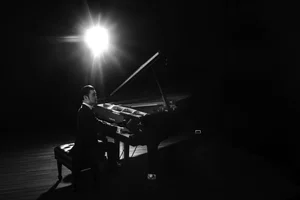
When I first began teaching more than twenty years ago, I thought I was teaching piano. Many years later, I came to understand that the piano is only the medium. What it truly trains has never been merely the fingers, the ears, or stage performance, but how a person thinks, how a person feels, and how, over long-term training, a person gradually forms cognition and perspective. This is precisely why the performances that truly move us, though firmly rooted in musicianship and technique, are far greater than the sum of it's parts. They are the natural flowering of a deep artist after long, rigorous, and sustained training.
Interestingly enough, in the age of artificial intelligence, this well developed individual is the exactly what we need. Contemporary artificial intelligence systems, however astonishing their abilities may be, still do not think in the human sense. What they excel at is recognizing patterns within massive amounts of data and generating results that appear coherent and reasonable according to probability. But they do not truly understand, nor can they experience. Their value ultimately still depends on how human beings choose to adopt and apply their output. Just as even the most advanced navigation system cannot replace the driver’s own need to watch the road, we likewise cannot surrender our own discernment in the face of artificial intelligence’s output.
Therefore, the real challenge of the future is not to compete with machines in the areas where machines excel, but to develop the abilities that machines do not possess: creativity, discernment, and integration. These abilities do not come from intelligence alone. They come from a trained mind, a disciplined body, and a nourished soul.
This kind of truly integrated inner structure does not disappear when music lessons end. On the contrary, it seeps into the decisions and actions, large and small, of a person’s life—especially for the vast majority of students who will not pursue a professional musical path. Surveys from highly selective universities such as Harvard, Yale, and Oxford show that roughly thirty to fifty percent of incoming students had received long-term musical training before admission. This of course does not mean that musical training itself leads directly to success. But it does suggest at least this: those who are able to persist in this kind of training over a long period are often also more likely to possess the ability to delay gratification, focus deeply, manage themselves, and accumulate growth over time.
And yet, in certain educational contexts today, music is often regarded as “impractical.” But the real question is precisely this: the true meaning of education is not simply to chase immediate returns, but to give a person the lifelong ability to know oneself, cultivate oneself, complete oneself, and better serve society.
In a sense, the development of artificial intelligence has made this point even clearer. Machines are rapidly taking over tasks that are repetitive, clearly rule-based, and purely executive in nature. What is becoming increasingly rare are those human abilities that cannot simply be broken down into instructions: the ability to ask questions, the ability to understand others, the ability to integrate across fields, and the ability to forge a new path amid uncertainty.
If we are worried about being replaced by machines in the future, then the answer is probably not to train ourselves to become more like machines. It is to return to becoming more complete human beings. And in this regard, music is not an extracurricular. It is the a crucial leg in the journey.